- Storage
- Fulfilment
- Transport
- Dropshipping
 Pallet storage is a flexible warehousing solution for businesses that need to store, manage and distribute goods on pallets. Across the UK, warehouses and 3PL providers offer pallet storage for everything from standard ambient goods to temperature-controlled, bonded, hazardous and oversized products.
The cost of pallet storage depends on factors including the number and size of pallets, warehouse location, storage duration, racking requirements, handling and any additional services required. As a general guide, UK pallet storage prices typically range from £1.50 to £5.00 per pallet per week, before additional receipt, handling and despatch charges.
This guide explains what pallet storage typically costs in the UK, what influences those prices, and the different types of pallet storage commonly offered by warehouses and 3PLs nationwide. This information is based on data gathered by whichwarehouse, the UK’s largest warehousing site, with experience analysing pallet storage enquiries and pricing trends. Pricing examples are indicative and can vary between operators and regions.
What is Pallet Storage?
Pallet storage is the storage of goods on pallets within a warehouse or 3PL facility. Businesses use pallet storage to hold stock until it is needed for fulfilment, onward distribution or manufacturing. It can be used by eCommerce fulfilment businesses, manufacturers, retailers, importers and other businesses that need additional warehouse space.
A business may use pallet storage because it does not have a warehouse of its own, needs additional capacity during periods of increased demand, or requires temporary overflow storage, such as during the Christmas peak. Pallet storage can also be used for specialist goods, including bonded goods, temperature-controlled products and hazardous goods, where the warehouse has the appropriate facilities and permissions.
Pallets can be stored either on the warehouse floor, where they may be stacked depending on the goods and warehouse configuration, or in pallet racking to make better use of available vertical space. The most suitable storage method depends on factors such as pallet dimensions, weight, the goods being stored and how frequently they need to be accessed.
How does Pallet Storage Work?
Pallet storage involves more than simply placing goods in a warehouse. It is a series of processes that begins when goods arrive at the warehouse, either already palletised or as loose goods.
The warehouse receives and checks the stock and, where required, palletises the goods before allocating them a storage location. Pallets may then be placed in racking or stored on the warehouse floor. Their location and inventory are recorded and monitored, typically using a warehouse management system.
When stock is required, for example for fulfilment or onward distribution, the warehouse locates and retrieves the relevant pallets and prepares them for collection or despatch.
These activities form part of Receipt, Handling and Despatch (RH&D), which covers the receiving, movement and despatch of goods through the warehouse. RH&D charges are generally separate from the ongoing pallet storage charge.
Average Pallet Storage Pricing
Average pallet storage prices in the UK typically range from around £1.50 to £5.00 per pallet per week. These figures are indicative only, as storage rates can vary between warehouses depending on a range of factors outlined below.
Warehouses charge for pallet storage in a number of different ways, most commonly on a per-pallet, per-week basis, although some operators may price storage on total cost per month for longer-term agreements. Pricing can vary depending on whether goods arrive already palletised or require palletising on arrival, which can increase overall storage and handling costs.
If goods are loose, oversized, or unsuitable for standard pallet racking, warehouses may charge by the square foot rather than per pallet, as these items typically take up more floor space than a standard pallet configuration.
RH&D (Receipt, Handling & Despatch) Charges
Warehouses also charge RH&D, which stands for Receipt, Handling and Despatch. These charges cover the cost of receiving pallets into the warehouse, moving them into storage, and picking and preparing them for despatch.
RH&D is usually charged per pallet and may be applied either as separate inbound and outbound fees or as a combined in-and-out rate. For example, a warehouse may charge £1.60 per pallet on intake and £1.60 per pallet on despatch.
On average, RH&D charges typically range between £1.30 and £3.50 per pallet, although prices vary depending on warehouse processes, pallet type, and handling requirements. For more information check out our RH&D guide.
Additional Pallet Storage Costs & Services
Depending on your requirements, pallet storage costs are not limited to storage alone. If additional handling or operational services are needed, overall pricing will increase. These charges vary based on the factors outlined above. 
- Inbound Handling / Receipt of Goods –
£1.30 – £3.50 per pallet. Charged for unloading vehicles, checking pallets and booking stock into the WMS. - Picking & Despatch / Outbound Handling –
£1.30 – £3.50 per pallet. Covers retrieving pallets from storage and preparing them for outbound transport. Multiple-SKU or partial pallet picks may incur higher charges. - Palletising / De-palletising –
£1.00 – £6.00 per pallet for standard handling. Applied when goods arrive loose or need to be broken down and rebuilt onto pallets. Dependent on how extensive the labour required is. - Value Added Services such as shrink wrapping & relabelling –
5p – £10.00 per pallet or per activity depends on service type & complexity. Used to secure loads, apply compliance labels, or rework pallets for redistribution. For example labelling can range from 5p to 50p. Some businesses do this based on an hourly rate or promised key performance indicator (KPI) amount. - Returns Handling –
£2.00 – £6.00 per pallet or return. Includes inspection, re-storage, reworking, or disposal of returned goods. This is usually an hourly rate also or by piece rate which can be 30p to £1.00. This price can be raised based on the product requirements for example a laptop would need pat testing and sanitation also done to it. - Devanning & Vehicle Unloading –
Pricing depends on whether goods are single-SKU or mixed, whether charges are applied per carton or pallet and the size of vehicle or container. If a container is palletised it could be from £80.00 to one with loose cartons costing £500.
| Service | Average UK Price | Unit |
| Pallet Storage | £1.50 – £5.00 | Per Pallet Per Week |
| Receipt | £1.30 – £3.50 | Per Pallet |
| Despatch | £1.30 – £3.50 | Per Pallet |
| Palletising/De-palletising | £1.00 – £6.00 | Per Pallet |
| Value Added Services | £0.05 – £10.00 | Per Activity |
| Returns Handling | £2.00 – £6.00 | Per Pallet / Return |
| Devanning/Vehicle Unloading | £80.00 – £500.00 | Per Container |
Types of Pallet Storage
 There are several types of pallet storage available in the UK, each with different requirements and costs depending on the goods being stored.
-
Standard Pallet Storage:
Ambient goods stored on standard pallets. Requires only basic warehouse space. Suitable for non-specialised, non-perishable items.
-
Bonded Pallet Storage:
Goods that must remain under customs control until duties or taxes are paid. Wet bond for products such as alcohol or dry bond for products such as tobacco and certain dry foods such as coffee. Warehouses must be licensed to handle bonded goods, which increases storage costs.
-
Temperature-Controlled Pallet Storage:
For pallets that require chilled, frozen or heated storage. Commonly used for perishable foodstuffs or temperature-sensitive goods. Requires specialised equipment and higher energy costs.

-
Hazardous Pallet Storage:
Includes chemicals, flammable goods, and other dangerous cargo. Requires licensed handling, strict safety procedures, and compliance with regulations, increasing costs.
-
Bulk & Oversized Cargo:
Pallets that are bulky, irregular, or oversized may require more floor space and often cannot be stacked efficiently. Warehouses may charge by square foot rather than per pallet.
Pallet Storage Prices Influencing Factors
Location
The location of a warehouse is a major factor affecting pallet storage prices in the UK. Facilities near high-demand cities such as London or along key transport routes like the M25 typically charge more due to higher land values and overall operating costs.
In contrast, regions such as the Midlands often offer more competitive rates because of high warehouse density and excellent transport links. Northern areas, like the North West, can also provide lower prices thanks to reduced land and labour costs.
Specialised Storage
 Not all palletised goods are standard ambient items. Specialised storage requires extra handling, compliance measures, and dedicated infrastructure, which increases costs. This includes bonded pallets, which require customs and tax compliance, temperature-controlled goods, requiring chilled or frozen storage and hazardous cargo, which need licences and additional safety procedures. These specialised requirements mean warehouses charge a premium to cover the extra resources and risk.
Volume, Racking & Stacking
The total volume of pallets stored often affects pricing. Larger volumes can reduce per-pallet costs, as warehouses can spread overheads across more units and offer discounts for long-term or high-volume contracts.
Pallets that are bulky or oversized may incur higher costs if more floor space is required, often leading to charges calculated by square foot rather than per pallet.
Effective racking or stacking allows warehouses to maximise space vertically, which can reduce per-pallet costs by using the warehouse more efficiently.
Length of Storage
Storage duration has a significant impact on price. Short-term, flexible storage, charged by day or week, is often higher due to dynamic stock movements, increased labour requirements, and reduced planning predictability.
Long-term storage, usually billed monthly, typically offers lower per-pallet costs. Predictable occupancy allows warehouses to plan space usage efficiently and reduce handling costs, which can be passed on as savings to clients.
Warehouse Facility
 The type and quality of the warehouse facility also influence prices. Modern, automated, and sustainable warehouses usually charge higher rates than traditional warehouses due to advanced systems, energy efficiency, and security.
Automated facilities use robotics, conveyors, and advanced warehouse management software, increasing efficiency but at a premium per-pallet cost.
Sustainable warehouses invest in low-carbon infrastructure and energy-saving systems, which may slightly raise rates but offer long-term savings and ESG benefits.
High-security warehouses with 24/7 monitoring, gated access, and enhanced insurance typically carry a premium to protect high-value goods.
Older, traditional warehouses usually offer lower rates but may involve slower handling and higher operational risk.
Racked Pallet Storage
 Some warehouses use floor-stacked pallet storage, while others use pallet racking systems to maximise storage capacity by making use of the warehouse’s vertical space. Racked warehouses can store more pallets within the same floor area, improving space efficiency and potentially reducing the amount of warehouse floor space required per pallet.
Each racked warehouse has limits on the height and weight of pallets it can safely accommodate. These limits are determined by factors such as the racking configuration, available warehouse height and the capacity of the racking system. Requirements vary between warehouses, so it is important to confirm the permitted pallet dimensions and weight before delivery. Pallets that exceed these limits may require alternative storage arrangements or incur additional charges.
Not every pallet is suitable for every racking system. Warehouses will typically consider pallet dimensions, height, weight and construction, as well as the characteristics of the goods being stored. Oversized, unstable or irregularly shaped pallets may not be suitable for standard pallet racking and may need to be stored on the warehouse floor.
Racked vs Floor Pallet Storage
Racking generally makes better use of vertical warehouse space, while floor storage can be more suitable for oversized, bulky or irregular pallets. Floor-stacked storage may also be appropriate where goods can safely be stacked and individual pallet access is not required.
The most suitable pallet storage method depends on the goods, pallet dimensions, storage volume and how frequently stock needs to be accessed. These factors can also influence the overall cost of pallet storage.
Pallet Storage Sizes
The dimensions of a standard UK pallet are 120cm x 100cm, with the total pallet height typically kept under 2.2 metres, including goods. This differs from Euro pallets, which are commonly used for European distribution and imports and measure 120cm x 80 – 90 cm, with similar height restrictions applied. 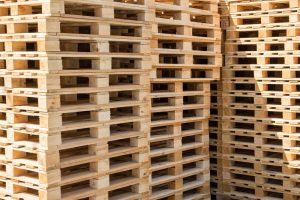
Some warehouses and businesses also use oversized pallets, which exceed the standard 120cm x 100cm. These pallets typically carry the same height restrictions but occupy more floor space.
In some cases, pallet storage operators quote prices based on square footage rather than per pallet. A standard UK pallet occupies approximately 1.2m², which converts to around 12.9 sq ft (1.2 × 10.764). If pallets can be stacked or placed on racking, the floor space requirement may be reduced depending on the warehouse’s configuration.
Many warehouses set maximum pallet height and weight limits. Pallets that exceed these limits may attract premium charges or be stored on the floor rather than in racking. Heavier pallets can also increase costs due to higher RH&D charges or the need for reinforced racking systems.
If your cargo is heavier, taller, or bulkier than a standard UK/EU pallet, higher storage and handling costs should be expected particularly where racking is not possible.
How to Find Accurate Pallet Storage Quotes
Pallet storage prices vary based on storage requirements, handling needs, and operational complexity. To receive accurate and comparable pallet storage quotes, warehouses and 3PLs require clear detailed information. Supplying the details below helps ensure pricing reflects your needs, avoiding unexpected charges.
- Number of pallets or square footage required

- Pallet dimensions
- Type of goods
- Location preference or acceptable regions
- Length of storage
- Racking suitability (rackable or floor-stacked pallets)
- Palletising or de-palletising requirements
- Unloading or devanning requirements (container or vehicle deliveries)
- Despatch requirements (frequency and pallet volumes)
- Proposed start date
- Any value-added services required
Finding Pallet Storage with whichwarehouse
For more information on how whichwarehouse helps businesses find pallet storage, compare providers, and request quotes, visit our find pallet storage page.
Pallet Storage FAQs (UK)
What is pallet storage?
Pallet storage is the storage of goods on pallets within a warehouse or 3PL facility. Businesses use pallet storage to hold stock until it is required for fulfilment, distribution, manufacturing or onward delivery. Pallets may be stored in racking or on the warehouse floor depending on the goods, pallet dimensions, weight and storage requirements.
How does pallet storage work?
Pallet storage involves receiving goods into a warehouse, checking and recording the stock, allocating pallets to storage locations and managing the inventory while it is stored. When stock is required, the warehouse retrieves the relevant pallets and prepares them for collection or despatch. These activities form part of the receipt, handling and despatch (RH&D) process.
How much does pallet storage cost in the UK?
Pallet storage prices in the UK typically range from £1.50 to £5.00 per pallet per week. The exact cost depends on factors such as warehouse location, storage duration and volume
Why do pallet storage prices vary so much between warehouses?
Pallet storage prices vary due to differences in location, warehouse type, facility quality, labour costs, storage volume, and service complexity.
Are there extra charges on top of pallet storage costs?
Yes. In addition to storage fees, most warehouses apply RH&D (Receipt, Handling & Despatch) charges, as well as fees for services such as palletising, de-palletising, picking, despatch, returns handling, and container unloading.
What are RH&D charges in pallet storage?
RH&D stands for Receipt, Handling and Despatch. These charges cover receiving pallets into the warehouse, moving them into storage, and preparing them for outbound transport. RH&D charges typically range from £1.30 to £3.50 per pallet.
Does pallet size affect storage pricing?
Yes. Standard UK pallets (120cm × 100cm) are usually priced at the lowest rate. Oversized, heavier, or taller pallets take up more space or may not be suitable for racking, which can increase storage costs. In some cases, warehouses charge by square foot instead of per pallet.
What is the difference between racked and floor pallet storage?
Racked pallet storage uses vertical racking systems to maximise warehouse height, allowing more pallets to be stored in the same floor area. Floor storage places pallets directly on the warehouse floor. Racked storage is generally more space-efficient and often cheaper per pallet, provided pallets meet height and weight limits.
What information do warehouses need to provide an accurate pallet storage quote?
To provide accurate pricing, warehouses typically require details such as the number of pallets, pallet dimensions and weight, type of goods, storage duration, racking suitability, handling requirements, location preferences, and despatch frequency. Providing clear information helps avoid unexpected charges.
Is pallet storage pricing the same across the UK?
No. Pallet storage pricing varies significantly by region. London and the South East generally have higher rates, while areas such as the Midlands and North West often offer better value due to lower land and labour costs and high warehouse availability.
How does whichwarehouse help businesses find pallet storage?
whichwarehouse helps businesses compare pallet storage providers across the UK, understand pricing and request free, comparable quotes based on their specific storage and handling requirements.