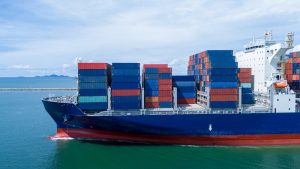
 Chinese freight forwarders shipping goods into the UK increasingly require warehousing, pallet storage and fulfilment services to support their operations. whichwarehouse can help freight forwarders and international logistics businesses find the right warehouse and 3PL provider that suits their requirements. Chinese freight forwarders can find solutions to support their imports, ecommerce operations and distribution through UK ports, airports and 3PLs that improves their efficiency and avoids delays.
This guide explains how Chinese freight forwarding works alongside UK warehousing and fulfilment services, including storage options, logistics considerations and common operational challenges. You’ll also learn how to compare warehousing providers based on location, storage requirements and fulfilment needs by using whichwarehouse to receive free quotes from suitable providers.
Why Chinese Freight Forwarders Need UK Warehousing
As ecommerce continues to expand and trade between the UK and China continues to evolve, increasing numbers of Chinese freight forwarders are seeking access to UK warehousing and fulfilment services to support imports, inventory management and onward distribution. According to the UK Department for Business and Trade, China remains the UK’s fourth largest trading partner, with total trade between the two countries increasing by 2.2% in 2025 compared with 2024.
Positioning inventory closer to end customers allows businesses to improve delivery performance, increase supply chain resilience and respond more effectively to changing demand patterns. Access to UK warehousing also supports faster fulfilment, greater inventory flexibility and more efficient nationwide distribution.
Using warehouse and 3PL facilities near major demand centres and multimodal transport links can also help streamline supply chain management by reducing unnecessary handling, improving inventory visibility and supporting more efficient distribution across the UK.
UK Ports & Airports
The UK’s transport infrastructure makes it an important destination for imported goods arriving from China. Major logistics hubs, including ports and airports, support freight forwarders by providing access to storage, distribution and onward transport networks.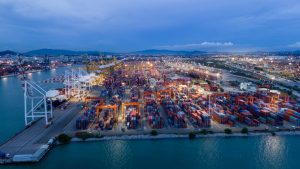
Deep sea ports such as Felixstowe and London Gateway handle significant volumes of container traffic and provide access to warehousing and national distribution routes. Air freight hubs, including East Midlands Airport and Manchester Airport, also support time-sensitive shipments and enable faster movement of goods into UK fulfilment and distribution networks.
Locating warehousing close to these transport links can help reduce handling times, improve operational flexibility and support more efficient movement of inventory.
Delivery Speed & Customer Expectations
Businesses and consumers increasingly expect fast, reliable and transparent delivery services. For freight forwarders supporting UK imports, warehousing plays an important role in helping inventory reach customers more efficiently.
Using UK warehousing and fulfilment services allows stock to be positioned closer to demand centres, helping reduce delivery lead times and improve operational resilience. Warehousing can also provide flexibility during periods of fluctuating demand, reduce pressure on port storage and support continuity when transport schedules change.
The Growth of Ecommerce & Omnichannel Fulfilment
 The continued growth of ecommerce and omnichannel retail has increased demand for modern warehousing and fulfilment capabilities. Many businesses now require more than pallet storage alone, with expectations around inventory visibility including geotracking, order processing, returns management and rapid delivery.
Modern 3PL providers often support these requirements through warehouse management systems (WMS), fulfilment services and distribution networks located close to population centres.
For Chinese freight forwarders supporting ecommerce and retail supply chains, access to UK warehousing can help customers manage inventory more effectively, improve fulfilment performance and support direct-to-consumer and marketplace operations. This is particularly valuable for sectors such as retail and fast fashion, where returns management plays an important role in maintaining customer satisfaction and controlling costs. Instead of shipping returned goods back to China, businesses can process, inspect and redistribute stock locally within the UK, creating a faster and more cost-effective reverse logistics operation.
whichwarehouse helps freight forwarders compare UK warehousing and 3PL providers based on location, storage requirements, fulfilment capabilities and operational needs to receive free quotes from suitable providers.
How Freight Forwarding from China to the UK Works
Chinese freight forwarding and UK warehousing operate as connected stages within the supply chain. Once goods leave manufacturing facilities in China, freight forwarders coordinate transport, customs clearance, storage and onward distribution to move inventory efficiently into the UK market.
For many importers, transportation is only one part of the process. Once goods arrive in the UK, warehousing and third-party logistics (3PL) providers play an important role in supporting inventory management, fulfilment operations and nationwide distribution.
Depending on shipment volumes, lead times and inventory strategy, goods may move through several transport modes before entering UK warehouse and fulfilment networks.
Sea Freight
Sea freight remains the most widely used transport methods for Chinese freight forwarding into the UK, particularly for containerised cargo and larger shipment volumes. China operates some of the world’s largest ports, with major export gateways including Shanghai, Shenzhen and Qingdao supporting international freight movements.
 Several shipping routes connect China and the UK depending on capacity, transit times and operating conditions. The most common route travels via the South China Sea, Indian Ocean and Suez Canal before entering Europe and reaching UK ports. Alternative routes may be used depending on shipping conditions and vessel scheduling such as the Northern Sea Route through the Artic which can be restricted due to ice. As highlighted by Cargo From China, these trade corridors play an important role in supporting freight movement and maintaining the flow of goods between China and the UK.
In the UK, imports commonly arrive through ports such as Southampton, Felixstowe, London Gateway and Liverpool, where freight can move directly into nearby warehousing and fulfilment facilities.
Warehouse access near ports supports temporary storage, inventory control, container unloading and onward distribution across the UK while reducing unnecessary transport movements.
Air Freight
Air freight is typically used when speed is prioritised over cost, particularly for time-sensitive, higher-value or fast-moving goods.
Major Chinese cargo gateways including Shanghai Pudong, Guangzhou Baiyun and Beijing Capital support international freight operations into the UK. On arrival, UK airports such as Heathrow, East Midlands and Birmingham provide access to warehousing, fulfilment and distribution infrastructure.
For Chinese freight forwarders supporting ecommerce, retail and urgent inventory requirements, locating warehousing close to air freight hubs can reduce lead times and improve responsiveness across the supply chain.
Road & Rail Freight
Once imports arrive in the UK, road and rail transport become important for moving inventory between ports, airports, warehouses and final destinations.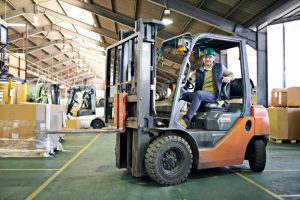
Historically, rail services connected China and Europe more directly, although today UK distribution is largely supported through domestic road and rail infrastructure after goods enter the country.
Many UK ports operate integrated rail terminals to support container movement, while motorway networks connect warehouse locations with key demand centres across London, the Midlands and Northern England.
Customs Clearance
Before imported goods can enter the UK market, customs procedures and import documentation must be completed. Freight forwarders typically coordinate customs requirements to help goods move efficiently from arrival points into warehouse operations.
Warehousing can provide additional flexibility during this stage by allowing inventory to be held while customs processes are completed rather than creating pressure for immediate distribution.
Many UK warehouse operators also provide bonded storage facilities. Bonded warehousing allows imported goods to be stored without paying import duty and VAT until inventory leaves the warehouse and enters the market. It can also support cash flow management, improve inventory flexibility and allow stock to remain positioned closer to UK customers.
Warehousing & 3PL Services
Once goods have entered the UK, warehousing and 3PL providers support storage, inventory management and fulfilment operations.
Warehouse services vary depending on requirements and may include pallet storage, order fulfilment, inventory control, returns handling, container devanning and value-added logistics services.
Selecting the right warehouse location and operating model can help freight forwarders improve operational efficiency while creating greater flexibility for changing customer demand.
Last-Mile Distribution
The final stage of freight forwarding focuses on moving goods from warehouse facilities to retailers, businesses or end customers.
Delivery performance has become increasingly important as ecommerce and customer expectations continue to evolve. As a result, many UK warehouses now operate as integrated fulfilment and logistics centres rather than traditional storage facilities.
Strategically located warehousing and 3PL providers allow Chinese freight forwarders to improve delivery performance, shorten lead times and support more efficient nationwide distribution.
Types of UK Warehousing Available
Once goods have arrived in the UK, warehousing requirements can vary depending on shipment volumes, delivery expectations and supply chain strategy. Chinese freight forwarders often require more than storage alone, with many businesses looking for fulfilment support and inventory management.
Selecting the right warehousing model can help reduce handling, improve stock visibility and support more efficient movement of goods from arrival through to final delivery.
Pallet Storage
Pallet storage is one of the most commonly used warehousing solutions for Chinese freight forwarders importing goods into the UK. Inventory is stored on pallets within warehouse facilities before being distributed to retailers or end customers.
This type of storage is often used when businesses require temporary overflow capacity, inbound inventory holding or flexible storage between transport stages. Warehouses offering pallet storage can support inventory management while helping freight forwarders position stock closer to UK demand centres.
Ecommerce Fulfilment
As ecommerce continues to grow, many Chinese freight forwarders support customers selling directly into the UK through online marketplaces and direct-to-consumer channels. Ecommerce fulfilment warehouses manage operations beyond storage, including inventory control, order processing, picking, packing, dispatch and returns handling.
Bonded Warehousing
Bonded warehousing can provide additional flexibility for Chinese freight forwarders managing imported inventory entering the UK.
Goods stored within a bonded warehouse can typically remain in storage before import duty and VAT become payable, allowing inventory to be held until it is ready to enter the market.
For freight forwarders, bonded storage can support cash flow management, provide greater flexibility during customs processes and allow stock to remain positioned closer to customers without immediate release into distribution.
Cross-Docking
Cross-docking is designed to reduce storage time by moving goods quickly from inbound transport directly into outbound distribution. Handling high-volume imports or time-sensitive inventory, cross-docking can reduce warehouse handling, shorten lead times and improve overall supply chain efficiency.
This model is often used where speed of movement is prioritised over long-term inventory storage.
Pick and Pack
 Pick and pack services support fulfilment operations by preparing individual orders for dispatch.
Rather than moving full pallets or bulk inventory, warehouse teams select products from storage, package orders and prepare shipments for delivery.
For freight forwarders supporting ecommerce, retail and omnichannel operations, pick and pack services can reduce operational complexity and improve order accuracy.
Container Devanning
Container devanning refers to unloading imported goods from shipping containers once they arrive at UK warehouse facilities.
This process allows inventory to be separated, inspected, palletised and prepared for storage or onward distribution.
Importing containerised shipments, access to warehouse facilities offering container devanning can improve operational efficiency and reduce delays between port arrival and fulfilment operations.
UK Logistics Hubs for Chinese Imports
When selecting a warehousing and logistics provider in the UK, location is one of the most critical factors, particularly for Chinese freight forwarders managing international supply chains. The right location directly impacts delivery performance, transport costs, and overall efficiency, especially when aligned with motorway access, port connectivity, and last-mile demand hubs.
For Chinese imports, the UK’s logistics network is built around a number of established freight corridors and fulfilment clusters.
Felixstowe
Felixstowe in Suffolk is the UK’s busiest container port and a major entry point for goods arriving from China. Its position on key deep-sea shipping routes makes it a natural gateway for large container vessels, Ro-Ro freight, and bulk cargo.
Felixstowe offers a highly integrated logistics environment, including container unloading, short-term storage, and onward distribution. A key advantage is its dedicated rail freight terminal, which allows containers to move directly from port to inland hubs without leaving the port ecosystem.
This makes Felixstowe particularly suitable for high-volume importers who require seamless integration with UK warehouse and 3PL networks, alongside efficient national distribution.
London Gateway
London Gateway is another major deep-sea port, strategically located closer to London and the South East, one of the UK’s highest demand regions for eCommerce and retail.
Its proximity to London provides a clear advantage in reducing last-mile delivery times and improving fulfilment speed. The port is also designed with modern logistics infrastructure, offering strong multimodal connectivity via road, rail, and sea.
London Gateway is often chosen for its scalability, speed to market, and direct access to dense consumer markets.
Birmingham
Birmingham sits at the heart of the UK’s logistics Golden Triangle, making it one of the most important inland distribution hubs in the country.
Its central location, combined with strong motorway links (including the M6, M5 and M42), allows rapid access to major population centres across the UK. Birmingham is also well connected via rail freight terminals, supporting efficient inland container movement.
Birmingham works particularly well as a national fulfilment hub, reducing overall transit distances and enabling faster, more cost-effective distribution across multiple regions.
East Midlands
The East Midlands is one of the UK’s most established logistics regions, forming a key part of the Golden Triangle alongside Birmingham and Northamptonshire.
It is home to East Midlands Airport, one of the UK’s primary air freight hubs, making it especially important for time-sensitive imports and express eCommerce fulfilment.
With strong motorway access and extensive warehousing infrastructure, the region is widely used for inventory storage, order fulfilment, and rapid distribution. For Chinese freight forwarders, the East Midlands offers a balanced combination of speed, connectivity, and scalability.
 Liverpool & Manchester
Liverpool and Manchester provide strong access to the North of the UK and play an important role in balancing national distribution networks.
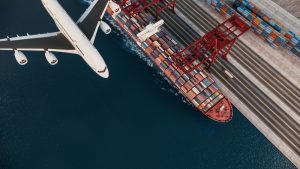
Liverpool is a key port for sea freight, while Manchester offers strong air freight capabilities through Manchester Airport. Together, they support multimodal logistics strategies for importers looking to serve northern demand centres more efficiently.
For Chinese freight forwarders managing UK-wide supply chains, these locations provide valuable diversification alongside southern port gateways.
Common Challenges Chinese Freight Forwarders Face in the UK
Customs and Port Delays
High-volume ports such as Felixstowe and London Gateway can experience congestion, particularly during peak shipping seasons. This can lead to delays in customs clearance, container backlog, and increased storage costs if goods are not moved quickly.
Incomplete or incorrect documentation can also slow down clearance processes. Since Brexit, customs requirements have become more complex, increasing both administrative burden and operational costs for international freight forwarders.
Using UK-based warehousing can help mitigate these issues by providing buffer stock capacity and enabling faster inland movement once goods are cleared.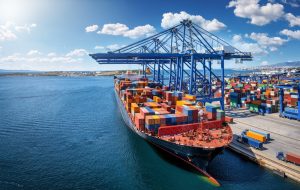
Consumer Expectations
In today’s eCommerce-driven market, customer expectations around delivery speed and reliability are higher than ever. Any disruption in the supply chain can quickly impact customer satisfaction and brand reputation.
Strategically located UK warehousing helps reduce delivery lead times by positioning stock closer to end customers. This approach supports faster fulfilment, improved reliability, and greater resilience in the face of global supply chain disruption.
As a result of rising global instability and conflict, just-in-case inventory strategies have become increasingly common among importers and retailers.
Cost and Inventory Inefficiencies
Managing international freight introduces multiple cost layers, from port handling fees to inland transport and cross-border logistics. Without efficient stock positioning, these costs can escalate quickly.
Modern UK 3PL providers use advanced warehouse management systems (WMS) to give full visibility over inventory across multiple channels and locations. This is particularly valuable for Chinese freight forwarders managing complex global supply chains with multiple handovers.
In many cases, storing goods inland, rather than relying on port-side storage, can significantly reduce handling costs and improve fulfilment efficiency. Choosing the right warehouse location can therefore have a direct impact on overall logistics profitability.
Challenges Finding Warehouse Space in the UK
Warehouse availability in the UK varies significantly by region, demand, and infrastructure access. Locations close to ports or within the Golden Triangle often experience higher demand, making suitable space harder to secure without specialist support.
Many of these challenges can be reduced by working with experienced UK warehousing and 3PL providers who understand import flows and regional logistics networks.
Platforms such as whichwarehouse make this process easier by allowing Chinese freight forwarders to compare providers, filter by location and capability, and request tailored quotes based on specific operational requirements.
How whichwarehouse Helps Chinese Freight Forwarders
 Finding the right UK warehouse can be challenging, particularly for overseas businesses entering the market for the first time. Whether you are a Chinese manufacturer, eCommerce brand, or freight forwarder expanding into the UK, having access to the right fulfilment partner is essential.
whichwarehouse connects businesses with a wide network of 3PL providers across the UK and Ireland, including options for bonded storage, port-centric logistics, pallet storage, and eCommerce fulfilment.
Users can search by location, filter by service requirements, and compare providers based on capacity, capability, and responsiveness. For more tailored needs, the Get Free Quotes option allows businesses to receive multiple proposals from suitable warehouse operators, helping them quickly shortlist the right partner.
Sources:
Cargo From China: Shipping Routes from China
UK Department for Business & Trade: 2026-05-14 China – UK Trade and Investment Factsheet
FAQs
What warehousing services do Chinese freight forwarders need in the UK?
Chinese freight forwarders often require more than storage alone. Common services include pallet storage, bonded warehousing, ecommerce fulfilment, container devanning, pick and pack, returns management and nationwide distribution. The right warehouse solution depends on shipment volumes, inventory strategy and delivery requirements.
Why do Chinese freight forwarders use UK warehouses?
UK warehousing allows Chinese freight forwarders to position stock closer to customers, reducing delivery lead times and improving supply chain flexibility. Warehouses can also support inventory management, fulfilment operations, customs processes and faster onward distribution across the UK.
What is the best UK location for warehousing Chinese imports?
The best location depends on business requirements and distribution strategy. Port locations such as Felixstowe and London Gateway are often selected for import efficiency, while inland hubs including Birmingham and the East Midlands support nationwide fulfilment and faster access to UK demand centres.
Can Chinese freight forwarders use bonded warehousing in the UK?
Yes, bonded warehousing allows imported goods to be stored before import duty and VAT become payable. This gives freight forwarders greater flexibility over inventory release, supports cash flow management and allows stock to remain positioned closer to UK customers.
How long does freight shipping from China to the UK take?
Transit times vary depending on transport mode, shipping routes and customs processes. Sea freight is typically used for larger shipments and lower transport costs, while air freight supports faster delivery for time-sensitive inventory.
How can UK warehousing improve ecommerce fulfilment?
UK warehousing supports ecommerce fulfilment by placing inventory closer to customers, reducing delivery times and improving stock availability. Many providers also offer pick and pack, order management, marketplace integration and returns handling.
What challenges do Chinese freight forwarders face when importing into the UK?
Common challenges include customs delays, port congestion, rising transport costs, inventory visibility and changing consumer expectations around delivery speed. Strategically located warehousing can help reduce disruption and improve operational efficiency.
What should Chinese freight forwarders look for in a UK warehouse?
Important considerations include warehouse location, access to ports and motorway networks, storage capacity, fulfilment capability, bonded options, warehouse management systems (WMS) and scalability during periods of demand growth.
How does whichwarehouse help Chinese freight forwarders?
whichwarehouse helps Chinese freight forwarders compare UK warehouse and 3PL providers based on location, storage requirements and fulfilment capability. Businesses can search available warehouse space or request multiple quotes from suitable providers.