 Warehouse pricing is no longer as simple as it used to be. Remember the days when a pallet came into a warehouse, was stored for a couple of months and then left, with everything covered by fewer than three prices? These days, that simplicity is becoming a memory.
Times are changing, and businesses want transparency as well as simplicity. 3PL pricing is increasingly being broken down into individual activities. Want something labelled? Add a price. Want something moved? Add a price. Want something assembled and sent out for delivery? Add two more prices. Receiving, storage, picking, packing, labelling, returns and more can all appear as separate charges.
This is touchpoint pricing.
But is greater transparency actually making warehouse pricing more difficult to compare and understand?
Businesses should know what they are paying for, and there should be no unexpected fees when they trust a warehouse or 3PL with their operations. However, there is a difference between being transparent and simply presenting a long list of charges.
Many businesses looking for warehousing or fulfilment services don’t necessarily know every service they need in the first place. Overloading them with individual fulfilment prices doesn’t necessarily make the decision easier when they are still working out what fulfilment even is.
This blog looks at what touchpoint pricing is, why 3PLs are moving towards it, and how it compares with more traditional warehouse pricing. We’ll also look at what we’re seeing across the market and how pricing varies depending on the type of operation.
Our view is based on the enquiries we’ve seen through whichwarehouse over the past year, covering a range of businesses, requirements and industries. Rather than looking at pricing in isolation, we want to explore what the move towards touchpoint pricing means for businesses trying to understand and compare their warehousing and fulfilment options.
What is touchpoint pricing?
Touchpoint pricing in warehouse space and third-party logistics is a pricing model where the provider charges for individual activities, or “touchpoints”, involved in handling a client’s goods.
For example, a business may ask a warehouse to store its eCommerce goods. Receiving the goods, checking them, putting them away and storing them can all be separate charges. But let’s say the business also wants the 3PL to handle its eCommerce fulfilment. Picking, packing, despatch and returns could then all have their own separate prices.
These logistics touchpoints can also have different charging bases, which adds another layer of complexity to a quote.
| Service | Charging Base |
| Pallet Storage | Per Pallet Per Week / Per Sq.Ft / Total Cost Per Month |
| Receipt | Per Pallet / Carton / SKU |
| Picking | Per Order / Item / Pick |
| Packing | Per Order / Package |
| Despatch | Per Shipment |
| Returns | Per Return / Item |
| Labour | Per Hour |
| Relabelling | Per Item |
| Pallet Handling | Per Pallet Movement |
This means that two 3PL quotes can look very different, even when the business being quoted has the same requirements. One provider may bundle several activities together, while another may price each touchpoint separately.
Why are 3PLs moving to this model?
It’s not just businesses pushing this model of warehouse pricing. 3PLs have several reasons for moving towards more detailed, touchpoint-based pricing.
First of all, customer requirements have changed. Not every business simply wants somewhere to store pallets anymore. The movement from traditional pallet storage towards wider 3PL services has created much more varied requirements.
A business storing 10 pallets a month has very different requirements from an eCommerce business storing 1,000 pallets and processing 1,000 orders a month. The same pricing structure cannot work for both. Even the difference between storing 5 pallets and 950 pallets can create very different costs for a warehouse, particularly when considering the space, handling and operational resources required.
There is also a difference between the amount of space a customer occupies and the amount of work they require from a warehouse.
 Two businesses might both store 50 pallets, but one may rarely move its stock while the other has constant activity. Frequent picking, repacking, stock movements and despatch all require additional labour and warehouse resources. Pricing therefore needs to account for not just how much space a business uses, but how much activity takes place around its stock.
This is also where specialist fulfilment has become more important. Businesses increasingly expect 3PLs to provide services that go beyond simply storing pallets. Warehouses may now be responsible for picking individual products, assembling orders, preparing goods for specific retailers or marketplaces, handling returns, relabelling products and carrying out other value-added services.
The biggest driver of this change has been the growth of eCommerce fulfilment.
eCommerce has introduced a much larger number of operational touchpoints, each of which can require different levels of labour, equipment and expertise. Multi-item orders, branded packaging, individual item picking, returns processing and warehouse management systems that integrate with online marketplaces are just some examples.
As warehouse operations become more varied and specialised, pricing has had to evolve with them. For 3PLs, charging for individual touchpoints can provide a way of reflecting the actual work involved in handling each customer’s goods, rather than applying the same pricing structure to every operation.
Touchpoint Pricing VS Traditional Warehouse Pricing
Both models have their own advantages for businesses and warehouse providers.
Traditional pricing focuses on simplicity, with fewer headline charges making an initial comparison easier. Many services may be bundled into one overall cost, meaning a potential client can get a clearer idea of their expected spend without having to calculate the cost of every individual warehouse activity.
For example, a business comparing two providers may see one offering storage at £2.00 per pallet per week and another at £3.00. At first glance, the £2.00 option appears cheaper. However, if the cheaper provider charges significantly more for picking, packing, handling and despatch, the overall cost could be very different. So, providing an overall amount first is easier to understand.
Touchpoint pricing takes the opposite approach. Rather than bundling services together, individual activities are priced separately, providing a more detailed breakdown of where the costs come from. A business can see how much it is paying for each part of its operation and potentially identify areas where costs could be reduced.
This greater visibility can mean that touchpoint pricing reflects actual usage more closely. A business that rarely moves its stock may not incur the same activity-related costs as one that requires constant picking, packing and despatch. Traditional pricing, on the other hand, can make it easier to understand the expected cost at the outset and create an initial budget.
Neither model automatically makes one warehouse cheaper than another. The important issue for businesses is understanding exactly what they are being quoted for.
When comparing warehouse or 3PL pricing, make sure you know what is included, what is charged separately and whether there are any minimum charges or additional fees that could affect the final cost. The headline price is only part of the picture. What matters is understanding the complete cost of the operation you require.
What does this mean for the real cost of using a 3PL?
Compare every cost!
The headline price can differ significantly from the actual cost of using a 3PL. A business comparing two providers might look at the picking rate and immediately notice that one is significantly cheaper. However, once every other charge is added, that initial difference can quickly disappear.
The final monthly cost should take into account everything your operation requires. How much will the picking rate cost based on the number of orders you process each month? What is the pallet storage rate? How much will packaging cost? Are there charges for receiving, despatch, returns, pallet movements or other operational services?
 All of these costs should be calculated and compared, not just against another warehouse but against your own requirements.
For example, a warehouse may offer a particularly competitive pallet storage rate, but if you are an eCommerce business shipping 1,000 orders a month, the storage price is only one part of the equation. Picking, packing, packaging, despatch and returns could have a much greater impact on your overall monthly cost.
This is where touchpoint pricing can make comparing 3PLs more complicated. A lower rate for one individual service does not necessarily mean a lower overall cost.
The best way to compare providers is therefore to build a realistic picture of your operation. Use your expected pallet volumes, orders, inbound deliveries, returns and any additional services you require to calculate the likely monthly cost with each provider.
Don’t just compare the price of the touchpoint. Compare the cost of the complete operation.
Why is comparing 3PL quotes becoming more difficult?
Comparing 3PL quotes is becoming more difficult because one company’s pallet rate is not necessarily comparable with another warehouse’s pallet rate.
The reason is simple: they may include completely different services within that price.
 One warehouse might charge £3.00 per pallet but include services such as packaging, shrink wrapping and despatch. Another might charge £2.50 per pallet but price each of those services separately.
Looking only at the pallet rate would make the second option appear cheaper, but it doesn’t give you the full picture.
This is why businesses need to look beyond individual rates and understand exactly what is included in each quote. A cheaper storage or picking price does not necessarily mean a cheaper 3PL overall.
When comparing providers, businesses should make sure they are comparing the same services, volumes and requirements. Like-for-like pricing is the only way to get a meaningful comparison.
whichwarehouse gives businesses looking for free quotes from multiple providers the opportunity to compare them in a single table. This clearly lays out the price of each individual requirement, making it easier to see how providers compare across the services a business actually needs.
We also provide comments from warehouses alongside their quotes, helping businesses understand the pricing and what each provider’s quote includes. If something is unclear, businesses can get in contact with the warehouse to ask questions, understand what the price covers and discuss their requirements further.
Rather than simply comparing one headline figure, whichwarehouse helps businesses see the different costs that make up their warehousing or fulfilment operation.
What whichwarehouse is seeing in the UK warehousing market
Through the enquiries that come through whichwarehouse and the conversations we have with both businesses and warehouse providers, we are seeing a change in the way businesses approach warehousing and fulfilment pricing.
Many of the enquiries we send out across a range of businesses and industries ask for touchpoint pricing. Businesses want to know the individual costs for storage per pallet per week, handling, picking, WMS charges and value-added services rather than simply receiving one overall figure.
 This isn’t limited to businesses based in the UK either. We also receive enquiries from overseas businesses looking for warehousing in the UK, with many asking for the same level of pricing detail.
Our 2026 whichwarehouse data shows just how common this has become. Of the enquiries analysed, around 1 in 7 (13.7%) were sent with a sole total monthly cost, while 86.3% required multiple pricing elements. The most common requirements included receiving, despatch, storage per pallet per week and picking per carton.
The figures are based on whichwarehouse enquiries analysed from 2026. The enquiries cover businesses with different warehousing, pallet storage and fulfilment requirements across a range of industries. The figures represent the pricing information requested through whichwarehouse rather than the final pricing structure used by individual warehouse providers.
What does this mean for our enquiries?
Because of this, many of the enquiries we send to our warehouse and 3PL members have separate sections for different pricing requirements.
Depending on the operation, an enquiry may ask for:
- Storage per pallet per week
- Receipt per pallet or carton
- Picking per item or carton
- Repackaging
- Returns management
- Devanning
- Labour
- WMS costs
- Transport
The same approach can apply to other types of enquiries we receive, including vehicle parking.
There are still enquiries where we ask providers for a total monthly cost, but this represents a smaller proportion of the enquiries we send out. Our enquiry system sets out the requirements a business has given us, so it can be difficult for us to determine exactly how each individual 3PL structures its final quotation. However, through our conversations with providers, we regularly see both approaches: some prefer to price individual touchpoints, while others continue to provide an overall monthly figure.
For newer members, this can sometimes take a little getting used to. Some providers are accustomed to quoting a total cost rather than breaking every service down individually, and as a result may continue to provide their pricing as an overall figure.
We also see warehouse and 3PL providers applying minimum monthly charges, with WMS or technology costs being one example of where these can occur.
How many pricing elements are appearing in enquiries?
Across the 2026 enquiries analysed by whichwarehouse, the average enquiry contained six separately priced elements.
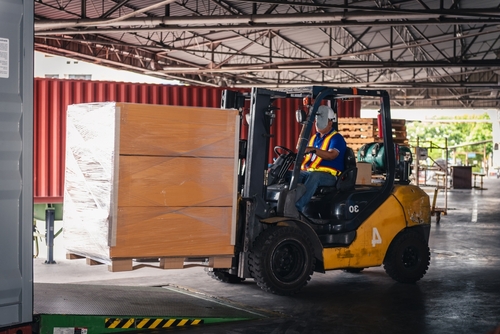 The most common were:
- Storage per pallet per week
- Receipt per pallet
- Despatch per pallet
- Picking per carton
- Labour per hour
- Transport
There are many other services that can be included depending on the requirements of the business, but these are among the most common pricing elements appearing in the enquiries we send.
The data gives us an interesting picture of how warehouse pricing is becoming more detailed. Businesses are increasingly asking for the individual costs that make up their operation, while providers are having to respond to enquiries that require several different pricing points rather than one simple monthly figure.
For whichwarehouse, this makes the ability to understand and compare the complete cost of an operation increasingly important. A warehouse may have a competitive storage rate, but that is only one part of the cost when a business also needs receiving, picking, packing, despatch, returns and other fulfilment services.
What businesses should ask a warehouse space provider?
A checklist is always a good idea when comparing warehouse and 3PL quotes. It helps make sure you have covered everything within the quote.
Before accepting a quote, ask:
What exactly is included in the storage rate?
How is picking charged: per order, item, pick, carton or another basis?
What does receiving and despatch include?
Is packing included in the price?
 Are packaging materials included in the cost?
Are there minimum monthly charges?
Are there any WMS, technology or account management fees?
Are relabelling and rework charged separately?
Are pallet movements or additional handling charged separately?
Are transport costs included?
How are damaged goods handled and charged?
How are returns charged?
Are there any other additional or value-added service charges?
Is touchpoint pricing good or bad for businesses and clients?
There are advantages to warehouses and 3PLs using touchpoint pricing for their clients.
- More visibility: Businesses can see the individual costs that make up their warehousing or fulfilment operation.
- Easier to identify cost drivers: Separating services can make it easier to identify which activities are contributing most to the overall cost.
- Charges can reflect actual activity: Businesses can be charged according to the services and level of activity their operation actually requires.
- Different operations can be priced differently: A high-volume fulfilment customer with frequent picking and despatch can have very different costs from a business that primarily requires storage and occasional stock movements.
However, there are also challenges that businesses need to consider.
- More difficult quote comparisons: Different providers may use different charging structures, making it harder to compare individual rates directly.
- Additional charges may be overlooked: When a quote contains numerous individual prices, businesses may miss charges that will have a significant impact on their final cost.
- Final costs can differ from headline rates: A competitive storage, picking or handling rate does not necessarily mean a lower overall cost.
- Businesses may not understand how their operation affects the final price: A business may know how many pallets it needs to store, but not realise how order volumes, picking frequency, returns or additional handling will affect its monthly bill.
Ultimately, the issue isn’t simply whether touchpoint pricing is good or bad. It comes down to how clearly the pricing is presented and whether a business can understand what those individual charges mean for its own operation.
Transparency is valuable, but it needs to be understandable.
How to compare warehouse, pallet storage & 3PL prices properly?
So how can comparing warehouse and 3PL pricing be made simpler?
Through whichwarehouse, you can get free quotes with no obligation, with your enquiry remaining completely anonymous until you decide which providers you want to shortlist. You can compare touchpoint or traditional pricing, services and location from warehouses and 3PLs across the UK, all in one place.
 It starts with one simple form. We use your requirements to understand how much warehouse space or pallet storage you need, your fulfilment operation, the number of SKUs and orders you process each month, your inbound and outbound volumes and the 3PL services you require.
From this information, we can identify the relevant pricing touchpoints for your operation, and you can provide touchpoints you would like to find out.
Once the quotes come back, you can compare them against each other and see the actual costs associated with each warehouse. Rather than simply comparing one storage or picking rate, you can look at the complete pricing structure alongside the services and location each provider offers.
You can also include specific questions within your enquiry. For example, if you need a warehouse with Shopify or Amazon fulfilment capabilities, you can ask for this when submitting your requirements. Providers can then respond to these questions within their comments, giving you more information to consider alongside their pricing.
All it takes to get started is one simple form that takes less than five minutes. We can then send your requirements to relevant warehouse and 3PL providers, giving you the opportunity to receive quotes from real providers in a matter of days.
Frequently asked questions about touchpoint pricing and 3PL costs
What is touchpoint pricing in warehousing?
Touchpoint pricing is a warehouse or 3PL pricing model where individual activities involved in handling goods are charged separately. These can include receiving, storage, picking, packing, despatch, returns, relabelling, kitting and pallet handling.
How does touchpoint pricing work for a 3PL?
A 3PL using touchpoint pricing separates the different activities involved in a customer’s operation and assigns a charge to each one. For example, a business may pay separately for pallet storage, receiving, picking, packing, despatch and returns rather than receiving one overall fulfilment price.
What is the difference between touchpoint pricing and traditional warehouse pricing?
Traditional warehouse pricing generally uses fewer headline charges and may bundle several services together, while touchpoint pricing separates individual warehouse and fulfilment activities. Touchpoint pricing can provide greater visibility of individual costs, while traditional pricing can make the initial cost easier to understand.
Why are 3PLs moving towards touchpoint pricing?
3PLs are increasingly dealing with more varied customer requirements, particularly as eCommerce fulfilment and value-added services have grown. Separating charges allows providers to account for differences in storage, handling, picking, packing, returns and other activities required by each customer.
What costs should I compare when choosing a 3PL?
Businesses should compare the complete cost of their operation rather than one headline rate. Depending on the service required, this can include storage, receiving, picking, packing, packaging, despatch, returns, pallet movements, labour, WMS or technology fees, transport and other value-added services.
Why can two 3PL quotes with the same pallet price have different total costs?
Two providers can charge the same pallet rate while including different services within that price. One provider may include handling, packaging or despatch, while another may charge separately for these activities. The pallet rate alone therefore does not show the complete cost of using a 3PL.
Is touchpoint pricing cheaper than traditional warehouse pricing?
Neither pricing model is automatically cheaper. The total cost depends on the business’s individual requirements, including storage volumes, order volumes, picking activity, receiving, despatch, returns and additional services. Businesses should compare the complete cost of their operation rather than individual rates.
What should I ask a warehouse before accepting a quote?
Businesses should ask what is included in storage, how picking is charged, what receiving and despatch include, whether packing and packaging materials are included, whether there are minimum monthly charges, whether WMS or technology fees apply, how returns are charged and whether additional handling, relabelling, rework or transport costs apply.
How can I compare warehouse and 3PL prices?
The best way to compare warehouse and 3PL prices is to provide each provider with the same operational requirements and compare the complete cost of the services you need. whichwarehouse allows businesses to request free quotes from multiple UK warehouse and 3PL providers and compare their pricing, services and locations in one place.