A Career in Supply Chain
Looking for a career in Supply Chain?
Watch this video below to where you can view Industry pros talk about the challenges and benefits of a career in supply chain management. Originally aired at ISM's 2013 Annual Conference in Dallas, Texas
Supply chain and logistics is a great industry to get into as it is continually growing and changing to accommodate the needs of the consumer.
So what makes the supply chain industry a good choice of career move?
Nowadays, with the change in consumer purchasing patterns, many more retailers are moving towards the online market. This changes the requirements … Read More
Preparing for disasters: engineering a resilient supply chain
They say a wise man expects disaster every seven years, but a supply chain manager expects it every day
The global, connected world economy has arrived, for all practical purposes. International trade has risen to levels that economists dismissed as idle dreams a few decades ago. Lean, agile supply chains have resulted in low cost, high quality consumer goods delivered to the customer’s door in a few days, and a higher standard of living in innumerable developing cou ntries.
On the other hand, the new way of doing things leaves us all more exposed than ever to disaster. A hurricane, … Read More
How to protect your supply chain from the ‘butterfly effect’ of the digitally empowered consumer
What is the butterfly effect in your supply chain?
A ‘butterfly effect’ is when a small, localised change or disruption in the flow through a supply chain has effects which cascade up and down the chain, sometimes having serious consequences for a business. The name comes from the thought experiment in Chaos Theory where a butterfly flapping its wings in Brazil could cause a hurricane halfway around the world. A better cliché might be ‘for lack of a nail, the Kingdom fell.’ Billions of pounds have been lost to butterfly effects on too-strained or too lean supply chains, and it … Read More
Five steps to a disaster-resistant supply chain
What should you be looking at to ensure a smooth running supply chain?
Supply chain and logistics managers need good data to base their prediction on, and as markets got more complex and globalised, good, solid data is becoming very hard to come by. There can never really be enough data to predict everything that can go wrong with a modern, lean supply chain. You need to have a resilient and adaptable chain in place before something goes wrong to be able to cope with problems now
Below are a few things you can do to make your logistics operations
… Read MoreThe challenges presented by a implementing a lean supply chain
Running a lean supply chain part two: 
A truly lean, optimised supply chain will be amenable to flow modelling, which in turn should produce shorter lead times, reduced inventory (and the consequent improvement in working capital numbers), and lower waste all along the supply chain. Your supply chain management team should be looking at the chain systemically, looking for improvements that can be made at any point and not just within your department or even within your organisation. Collaboration with all of your supply partners will be required for a full analysis, so you will first have to get a … Read More
Running a lean supply chain part one
The business case for a lean supply chain
There exist many forces in today’s markets that push us towards refining our supply chains, and advocate leaner practices. There is an overall shift to high volume, low margin products, which necessitates lower overhead. Most customers expect, and demand continual improvement of price, delivery speed, and service levels. The success of the globalisation movement has made supply ‘chains’ into complicated nets that defy the traditional ‘flow’ and ‘process’ models. Growing complexity in our SKU rosters is further complicating supply chains. Markets are becoming less stable, and shorter lead times have become … Read More
The true cost of reverse logistics for new businesses
Any good business owner knows the value of a solid forward supply chain, but what about the  opposite: reverse logistics? Reverse logistics can cost big companies millions and because of the complex nature of their supply chain, it’s often hard to pinpoint exactly where these costs come from.
There are certain unavoidable expenses when it comes to reverse logistics, and these can be heavy for new businesses.
Returning an item back to a bricks and mortar store is still generally the most cost-effective method for a small company, although this can be inconvenient for customers. With online or catalogue purchases, … Read More
Back to basics: cutting costs with better inventory management
Part 1: Knowing what you’ve got
Companies often evaluate their supply chain with an eye toward transportation costs. There is nothing wrong with this 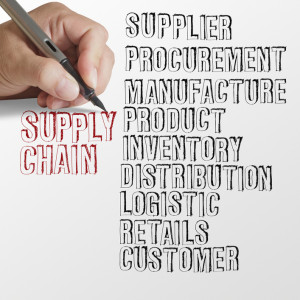 approach, and transport costs are usually the lion’s share of logistics costs, but inventory related costs should not be ignored. Inventory and warehousing costs may be your second largest logistics spend, and reducing those costs can help quite a lot.
Of course, every business is different. Different industries have different inventory needs, and different levels of customer service offerings within the same industry have different requirements. Nonetheless, every business has to decide how much inventory to … Read More
Supply Circles: Changing the way we think about supply ‘chains’ could really change the industry
Most of a manufacturer’s supply chain takes place outside of their facilities. Raw materials, crafting, forming, even assembly is increasingly being done more remotely. Using their power as a customer in these relationships, manufacturers can exert a great deal of influence on their suppliers, which can make many of the separate supply chains each uses become closed loops. This can result in closer, more reliable partnerships and lower costs.
What Is Supply Chain?
The term ‘supply chain’ gives rise to an image of goods starting in one place and eventually ‘ending up’ somewhere else. The image of a circle allows … Read More