Demand for self-storage continues to rise across the UK, driven by lifestyle and economic factors. As more people and businesses find themselves short on space, self-storage operators are adapting and innovating to meet this growing need.
London, one of the leading regions for self-storage demand, has become a focal point for this expansion. With a population approaching ten million, space within homes and flats has become increasingly limited. The capital’s student population has grown steadily and according to the Office for National Statistics (ONS), the use of short-term rentals across London has risen over the past year, further contributing to the demand for flexible and temporary storage solutions.
The city’s dense population and its position as a hub for start-ups and e-commerce businesses have also fuelled demand. Many online retailers and small companies prefer to base their operations close to or within London to reduce transport costs and improve last-mile delivery efficiency, making convenient, secure storage space even more valuable.
This surge in demand has been matched by a significant rise in supply. According to the Self Storage Association UK (SSA UK) Annual Industry Report 2024, the national self-storage market continues to expand rapidly, with new facilities opening across the country and increased competition among operators. In London, this growth is particularly notable, with a clear distinction between Central London’s high-end storage developments and the more affordable, large-scale sites in Outer London.
To stay competitive, operators in the capital have had to rethink the traditional storage model, focusing on innovative design, technology and customer experience. The Mayfair development, introducing a luxury underground storage facility beneath a hotel, is a prime example of how London’s self-storage landscape is evolving to meet modern expectations for space, security and convenience.
Central London’s Self-Storage Market & Innovations
According to an article in Boutique Hotelier, the Biltmore Mayfair Hotel has unveiled plans for a new self-storage development beneath the property. The hotel will offer 42,000 sq ft of space for residents to use as secure storage, with units ranging from 10 sq ft to several hundred sq ft. Designed with advanced security systems, the facility provides a discreet and safe environment for valuable and luxury possessions. Strong early enquiries highlight London’s continued appetite for high-quality, secure storage solutions. 
This development encapsulates London’s changing self-storage landscape. It illustrates how storage is evolving from a purely functional service into a luxury city convenience, integrated within premium real estate. For London, it shows how spatial pressure is driving developers to think vertically and creatively, while for the wider sector, it sets a new benchmark for blending security, technology and exclusivity in one of the world’s most competitive urban markets.
Building on this momentum, other Central London operators are enhancing their offerings to meet growing demand. Many now provide a variety of unit sizes, from compact lockers to larger rooms, catering for university students moving between homes and e-commerce sellers storing stock near their customers. Some operators segment services with student discounts, business packages and short-term rental options, making storage accessible to a broader audience.
To appeal to London’s premium market, some providers have introduced white-glove services, including professional collection and delivery, climate-controlled units and concierge-style assistance. Technology continues to play a growing role, with app-based access, digital booking systems and smart security allowing customers to manage their storage remotely and securely.
Outer London’s Appeal & Growth
Although geographically close, Central and Outer London differ significantly in the type of self-storage they offer and the audiences they attract. One of the most obvious distinctions is affordability. Prices drop noticeably outside the centre due to lower land and operating costs, allowing operators to offer more competitive rates and a wider range of options.
Freed from the space constraints of Central London, Outer London facilities can provide larger units and container storage, catering to customers needing space for furniture, tools or business inventory rather than just small lockers. Consumer trends also differ, Outer London sites mainly serve local households, start-ups and small businesses seeking accessible, cost-effective storage without travelling into the city centre. Proximity to key transport routes such as the M25 and A406 also makes these areas attractive for logistics firms and tradespeople operating across Greater London. 
While Outer London facilities may lack the luxury finishes of Central London’s boutique sites, they are typically modern, efficient and highly practical, prioritising drive-up access, ample parking and ease of loading. Newer developments increasingly incorporate sustainable design features, including solar panels, improved insulation and eco-friendly construction to reduce environmental impact and operating costs.
Overall, the key difference between Central and Outer London comes down to purpose. Central London targets those seeking convenience and premium services, while Outer London focuses on functionality, affordability and accessibility, qualities appealing to cost-conscious businesses and residents. With more people moving to Outer London and remote working on the rise, the area’s self-storage market has never been stronger.
Self-Storage Beyond London
It’s not just the capital seeing rising demand. Across the UK, from Wales to Scotland, more people are turning to storage when moving home, managing personal belongings or holding business stock. Cities such as Manchester and Birmingham have seen urban development, growing student populations and increased apartment living, much like London, creating a clear need for additional storage space.
Many regional markets are following the example set by London’s evolving storage sector. Developments such as Mayfair’s luxury underground storage illustrate the potential of combining security, technology and premium services, encouraging operators elsewhere to enhance their offerings. Features such as digital booking systems, smart access controls and premium services, including collection, delivery and white-glove options are becoming increasingly common outside the capital. 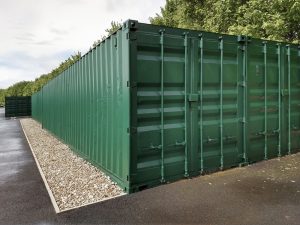
It’s not just major cities driving change. Areas with strong transport links and lower land costs, including commuter towns and regional hubs, are seeing steady growth. These sites typically serve local households, tradespeople and small businesses, offering the same practicality and accessibility seen in Outer London.
Across the country, operators are adopting innovations seen in London, such as online management portals, 24-hour access, enhanced security and climate-controlled units. Some suburban and rural facilities have diversified further, offering vehicle, caravan, and container storage, or partnering with removal and logistics companies to provide all-in-one moving solutions.
Where Will Self-Storage Go Next?
Shaped by lifestyle changes, urban integration and technology, the UK self-storage industry is set to continue rapid growth. Flexible storage is becoming essential in densely populated areas, while sustainability is increasingly important due to consumer demand and government pressure to reduce carbon footprints.
Technology will continue to drive innovation, from digital booking systems and automated monitoring to AI-assisted customer support, streamlining operations and replicating London’s successful models in other cities. Improved security and accessibility measures are also expected to expand.
Urban integration will define the next stage of evolution. Following Mayfair’s underground storage development, mixed-use buildings are likely to incorporate storage alongside residential, retail or hospitality spaces, making storage part of the lifestyle infrastructure rather than an afterthought.
Self-Storage with whichwarehouse
With demand growing and technology advancing, self-storage is evolving rapidly across the UK. For more information on self-storage check out our FAQ Guide.
At whichwarehouse, we help businesses find the right solution, whether in a major city or nearby town. Simply click Get Free Quotes on the homepage for support finding self-storage or warehousing in your area. Or call us on 0800 1 707 555 for assistance in searching for warehouse space and logistics solutions in the UK and Ireland. For cost-effective and hassle-free solutions you can also email us at [email protected].
Equally, if you’re a warehouse provider or self-storage facility looking to advertise warehouse space in your area, we can help promote your warehousing facilities and professional services.
Sources