 For many businesses, haulage companies provide the essential link between warehousing operations and international distribution networks. Goods are collected from storage facilities, manufacturing sites or fulfilment centres and transported along key freight corridors, including the Channel Tunnel and ferry crossings between the United Kingdom and Europe, ultimately reaching EU businesses and 3PLs.
Haulage companies specialise in the movement of goods by road using heavy goods vehicles (HGVs). This often involves transporting freight between warehouses, ports, international markets and European 3PLs that rely on dependable road transport to move inventory through supply chains. As a result, haulage operators form a critical part of supply chain management (SCM), connecting logistics providers, retailers and suppliers across the UK and mainland Europe.
While pure haulage companies focus solely on road freight transport, many operators also provide additional services to support distribution networks. These may include short-term warehousing, pallet distribution, cross-docking and fleet management solutions. Larger logistics providers often go further, offering integrated haulage and fulfilment services while operating distribution centres and providing end-to-end supply chain support.
The UK itself plays an important role as a gateway for companies distributing goods across Europe and beyond. Access to cross-Channel routes is central to this. From major ports such as Dover and Felixstowe to the Channel Tunnel, these routes provide haulage companies based in the UK with fast and reliable access to European destinations. Cross-Channel freight routes are therefore vital for UK trade, supporting international supply chains and allowing businesses to move goods efficiently to mainland Europe via haulage operators.
At the same time, the haulage industry is facing increasing pressure to reduce emissions and adopt more sustainable transport solutions. Growing public demand for cleaner logistics, combined with government decarbonisation targets, is encouraging many operators to explore environmentally friendly technologies such as electric HGVs.
This article explores how haulage companies move freight across the Channel, provides an overview of cross-Channel freight routes, highlights recent developments in electric HGV transport, and looks at the future of cross-border road freight between the UK and Europe.
How HGVs Cross the Channel
There are two main ways HGVs transport freight between the United Kingdom and mainland Europe: via the Channel Tunnel or through ferry crossings at major UK ports.
The route chosen by a haulage company often depends on several factors, including final destination, delivery deadlines, crossing costs and the type of cargo being transported.
Channel Tunnel
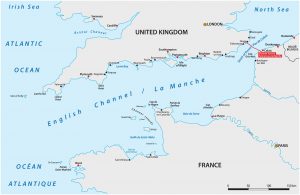 The Channel Tunnel is one of the fastest freight routes between the UK and mainland Europe. Operated by Getlink through the freight shuttle service LeShuttle Freight, the tunnel runs between Folkestone in Kent and Coquelles near Calais in northern France. The tunnel stretches approximately 31.4 miles, making it one of the longest undersea tunnels in the world.
For HGV drivers, the process is straightforward. Vehicles arrive at the freight terminal in Folkestone, pass through security and check-in procedures, and then drive directly onto specialised freight shuttle trains where drivers remain inside their vehicles during the crossing.
Departures operate throughout the day and night, giving haulage companies the flexibility to move goods at short notice and support time-critical deliveries. Once vehicles arrive in Coquelles, they can quickly access major European motorway networks and logistics corridors across northern France, Belgium and the Netherlands.
Because of its speed and reliability, the Channel Tunnel is commonly used for time-sensitive freight such as fresh food, retail products, automotive components and manufacturing supplies.
Ferry Routes
Ferry crossings offer an alternative method for transporting HGVs across the Channel. Instead of boarding a freight shuttle train, drivers travel via roll-on/roll-off ferry services from UK ports to destinations across northern Europe.
The process typically involves drivers arriving at the port, completing security and check-in procedures, and driving their vehicle directly onto the ferry. Unlike the Channel Tunnel crossing, ferry journeys allow drivers to leave their vehicles and rest during the voyage, which can help them comply with driver hours regulations.
Ferry routes can also provide greater flexibility for certain destinations. For example, direct crossings to ports in the Netherlands or Belgium may reduce road mileage and congestion compared with travelling through northern France.
Common freight ferry routes used by haulage companies include:
- Port of Dover → Port of Calais
- Port of Portsmouth → Caen
- Port of Hull → Rotterdam
Transit Times
Transit times are a key factor when haulage companies decide which crossing to use. Delivery deadlines, driver hours regulations, traffic conditions and the destination in Europe all influence route planning.
Typical crossing times include:
- Channel Tunnel freight shuttle: approximately 35 minutes
- Dover to Calais ferry: around 90 minutes
- Longer North Sea routes (such as Hull to Rotterdam): roughly 10–12 hours
While short crossings such as Dover to Calais are popular for time-sensitive deliveries, longer overnight ferry routes allow drivers to rest during the journey and provide direct access to major logistics hubs in the Netherlands and northern Europe while avoiding road congestion.
Journey Planning and Logistics Considerations
Selecting the right route is an important part of logistics planning for haulage companies. An inefficient journey can lead to delays, increased fuel costs and disruptions across wider supply chains.
When planning cross-Channel freight movements, operators often consider factors such as fuel costs, tolls, crossing fees and traffic congestion. For example, ferries may be more cost-effective for bulk pallet movements or container transport, while the Channel Tunnel is often preferred for time-critical deliveries requiring rapid access to northern France.
Geography also plays an important role in route selection. Businesses based in Kent or London may favour direct routes into northern France, while companies located in the Midlands or northern England may choose ferry routes connecting directly to Belgium or the Netherlands.
Customs and Documentation
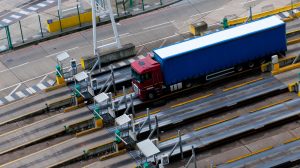 Haulage companies transporting goods between the UK and mainland Europe must also comply with customs and border procedures. Since the UK left the European Union, freight operators are required to submit customs declarations and safety documentation before goods cross the border.
In the UK, these processes are overseen by HM Revenue and Customs, which manages import and export declarations and ensures goods entering or leaving the country comply with customs regulations. Many haulage companies work closely with customs brokers or logistics providers to ensure documentation is completed accurately and delays at ports or the Channel Tunnel are minimised.
Efficient documentation and pre-lodged customs information are now an essential part of cross-Channel freight operations, helping goods move more smoothly between the UK and European markets.
Overview of Cross-Channel Haulage
Cross-Channel transport routes play a vital role in the UK supply chain, forming one of the most important freight corridors connecting the UK with mainland Europe. The strength of trade between the UK and European markets means supply chains on both sides of the Channel are closely integrated. As a result, large volumes of goods move between the regions every day, providing businesses with reliable access to European distribution networks.
Key gateways such as the Channel Tunnel and major UK ports enable haulage companies to move freight quickly and efficiently into continental Europe. These routes support a wide range of industries including food distribution, retail, FMCG and automotive manufacturing, all of which depend on reliable cross-border transport to keep supply chains running smoothly.
The scale of cross-Channel freight movement highlights its importance to UK trade. According to the Department for Transport, around 2.85 million road goods vehicle journeys were made from Great Britain to Europe in 2024.
Routes such as the crossing between the Port of Dover and the Port of Calais account for a significant share of this traffic and are widely regarded as one of Europe’s busiest freight corridors. Every day, thousands of HGVs travel between the UK and mainland Europe transporting goods for businesses. Once vehicles cross the Channel, they enter major European logistics gateways including Calais and Rotterdam.
Because many industries rely on frequent cross-border deliveries, any disruption to these freight routes can have a significant impact on wider supply chains. Delays in haulage operations can affect retail stock levels, manufacturing production schedules and international distribution timelines, which is why reliable freight gateways are so important for UK trade.
Freight Booking
Once a haulage company has selected the most suitable route, a crossing slot is booked with the relevant transport operator. During this process, operators provide details about the vehicle, driver and the type of cargo being transported. Customs declarations and safety documentation must also be prepared before the vehicle reaches the port or tunnel terminal.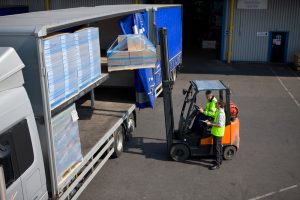
When the HGV arrives at the terminal, the driver completes security and check-in procedures before boarding the crossing. After travelling through the Channel Tunnel or via a ferry route, the vehicle continues its journey through European road networks to reach the final delivery destination.
As freight volumes continue to grow and environmental pressures increase, the way goods are transported across the Channel is beginning to evolve. One of the most significant developments is the introduction of electric HGV technology, which play an important role in reducing emissions from long-distance freight transport in the future.
Electric HGVs and the First Channel Tunnel Haulage
Electric heavy goods vehicles (eHGVs) are beginning to play a role in the future of international freight transport. For haulage companies, switching to electric vehicles could help reduce greenhouse gas emissions, lower reliance on diesel fuel and support the UK government’s wider decarbonisation targets for the transport sector.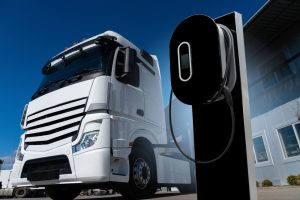
A significant milestone for the industry came recently when an electric HGV completed the first freight journey through the Channel Tunnel using the freight shuttle operated by Getlink. While electric trucks have previously been able to travel between the UK and Europe by ferry, the tunnel requires specific safety procedures for battery-powered heavy vehicles. Following testing and preparation, the first electric freight crossing demonstrated that zero-emission HGVs could operate on one of Europe’s most important logistics corridors.
The journey formed part of wider industry and government efforts to reduce emissions from road freight. According to the BBC, around a quarter of the UK’s trade with the European Union moves through the Channel Tunnel each year, highlighting the potential impact this advancement could have on international supply chains.
Challenges Facing Electric HGV Adoption
Although the technology is developing rapidly, several challenges remain before electric HGVs become widely used for long-distance freight transport.
Charging infrastructure remains one of the biggest barriers. Unlike diesel refuelling networks, charging facilities suitable for heavy vehicles are still limited across many UK and European motorway routes. Electric HGVs can typically travel several hundred miles on a single charge, but operators must plan journeys carefully to ensure charging points are available at depots or service areas. In many cases, vehicles are charged overnight or during scheduled driver breaks.
Vehicle weight is another factor affecting electric freight transport. Batteries required to power large HGVs add additional weight to the vehicle, which may reduce the amount of cargo that can be carried. This can influence route planning, vehicle efficiency and overall operating costs for haulage companies.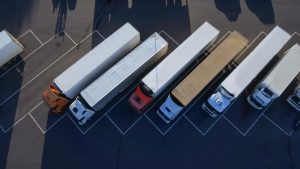
The industry is also seeing growing demand for secure HGV parking areas that include charging facilities. Safe overnight parking has long been a concern for drivers, and the transition to electric freight vehicles increases the need for dedicated infrastructure where trucks can charge while drivers take legally required rest periods.
Cost of adoption is another factor for haulage companies considering electric HGVs. Electric trucks currently have a higher upfront purchase price than traditional diesel vehicles, largely due to battery technology and newer vehicle platforms. However, operating costs can be lower over time, as electric vehicles typically require less maintenance and electricity can be cheaper than diesel depending on charging infrastructure. To support the transition, the UK government has introduced funding schemes and grants through the Department for Transport to encourage the adoption of zero-emission HGVs.
Despite these challenges, developments in battery technology, government incentives and new charging networks are expected to support the gradual expansion of electric freight transport. As more infrastructure is introduced, electric HGVs are likely to become an increasingly important part of cross-Channel logistics and the wider transition towards lower-emission supply chains.
Future of Cross-Channel Freight
 Freight transport between the UK and Europe continues to evolve as the logistics industry responds to new technology and sustainability targets. Improvements in battery range and vehicle efficiency are making electric trucks more viable for long-distance transport, while investment in charging infrastructure along major freight corridors is also increasing. Government policies aimed at reducing emissions from road transport are expected to accelerate the adoption of zero-emission vehicles across the haulage sector in the coming years.
At the same time, supply chains are becoming more connected and data-driven. Businesses increasingly rely on integrated logistics networks linking warehouses, haulage companies and major European distribution hubs. Advances in digital freight documentation and border systems are helping to streamline customs procedures and reduce delays at key crossings. As cross-Channel trade continues to grow, routes such as the Channel Tunnel and major ferry services will remain critical gateways, ensuring haulage companies continue to play an essential role in connecting UK warehouses, fulfilment centres and distribution networks with markets across Europe.
Sources:
- Department of Transport Official Statistics: Road goods vehicles travelling to Europe: 2024
- BBC News: First electric HGV crosses Channel Tunnel
whichtransport
As the haulage industry continues to evolve, so too does the way transport companies connect with customers and businesses looking for reliable freight services.
To help, whichwarehouse is now expanding with whichtransport, a brand-new platform in development dedicated to helping transport-only companies get seen and contacted faster online.
We know how competitive the transport industry is, getting found by the right customers online can make all the difference. That’s why we’re excited to share something new we’re launching just for transport businesses.
For our early launch, we’re inviting just a few pure transport companies to join a free early-access trial, no strings attached!
Here’s what it’s all about:
1) Be one of the first listed on whichtransport
2) Benefit from our proven SEO authority (we’ve helped hundreds of warehouses reach page 1 of Google)
3) Get found for searches like:
- “Haulage services Northampton”
- “Cargo transport Kent”
- “Same-day courier Birmingham”
If you want more local leads, more visibility and more customers finding you, this free trial is your chance to get ahead before we open the platform to the public.
Just email [email protected] to let us know you’re interested and we’ll send you over the details.
Looking for UK warehousing for your overseas business?
Cross Channel Haulage FAQs:
What is cross-Channel freight?
Cross-Channel freight refers to the transportation of goods between the United Kingdom and mainland Europe using routes such as the Channel Tunnel or roll-on/roll-off ferry services from UK ports. Haulage companies use HGVs to move goods from warehouses, fulfilment centres and manufacturing facilities across the Channel into European logistics networks.
How do haulage companies transport goods between the UK and Europe?
Most haulage companies move freight across the Channel in two ways: through the Channel Tunnel freight shuttle service or via ferry crossings from UK ports. Vehicles either drive onto specialised freight trains at the tunnel terminal or board roll-on/roll-off ferries that transport HGVs to ports in France, Belgium or the Netherlands.
How long does it take for an HGV to cross the Channel?
Transit times vary depending on the route. The Channel Tunnel freight shuttle typically takes around 35 minutes, while ferry crossings such as the route between the Port of Dover and Port of Calais take approximately 90 minutes. Longer North Sea ferry routes, such as the crossing between the Port of Hull and Port of Rotterdam, can take 10–12 hours.
Why is cross-Channel haulage important for UK trade?
Cross-Channel freight routes are essential for UK supply chains because they provide direct access to European markets. Millions of road freight journeys are made each year between the UK and mainland Europe, supporting industries such as retail, food distribution, automotive manufacturing and e-commerce logistics.
What are electric HGVs and how could they change cross-Channel freight?
Electric heavy goods vehicles (eHGVs) are battery-powered trucks designed to reduce emissions from road freight transport. As battery technology improves and charging infrastructure expands, electric HGVs could play an increasing role in cross-Channel freight by helping haulage companies reduce carbon emissions and meet sustainability targets.
What factors influence which route a haulage company chooses?
When planning cross-Channel freight routes, haulage companies consider several factors including delivery deadlines, crossing costs, driver hours regulations, traffic conditions and the final destination in Europe. Time-critical deliveries often use the Channel Tunnel, while longer ferry routes may be chosen for overnight travel or direct access to ports in the Netherlands and northern Europe.
How are logistics networks evolving between the UK and Europe?
Modern supply chains increasingly rely on integrated logistics networks that connect warehouses, haulage companies and distribution hubs across multiple countries. Improvements in digital freight documentation, border technology and sustainable transport solutions are helping to make cross-border freight movement faster and more efficient.